Punta Corcho and the chicle trade
1898
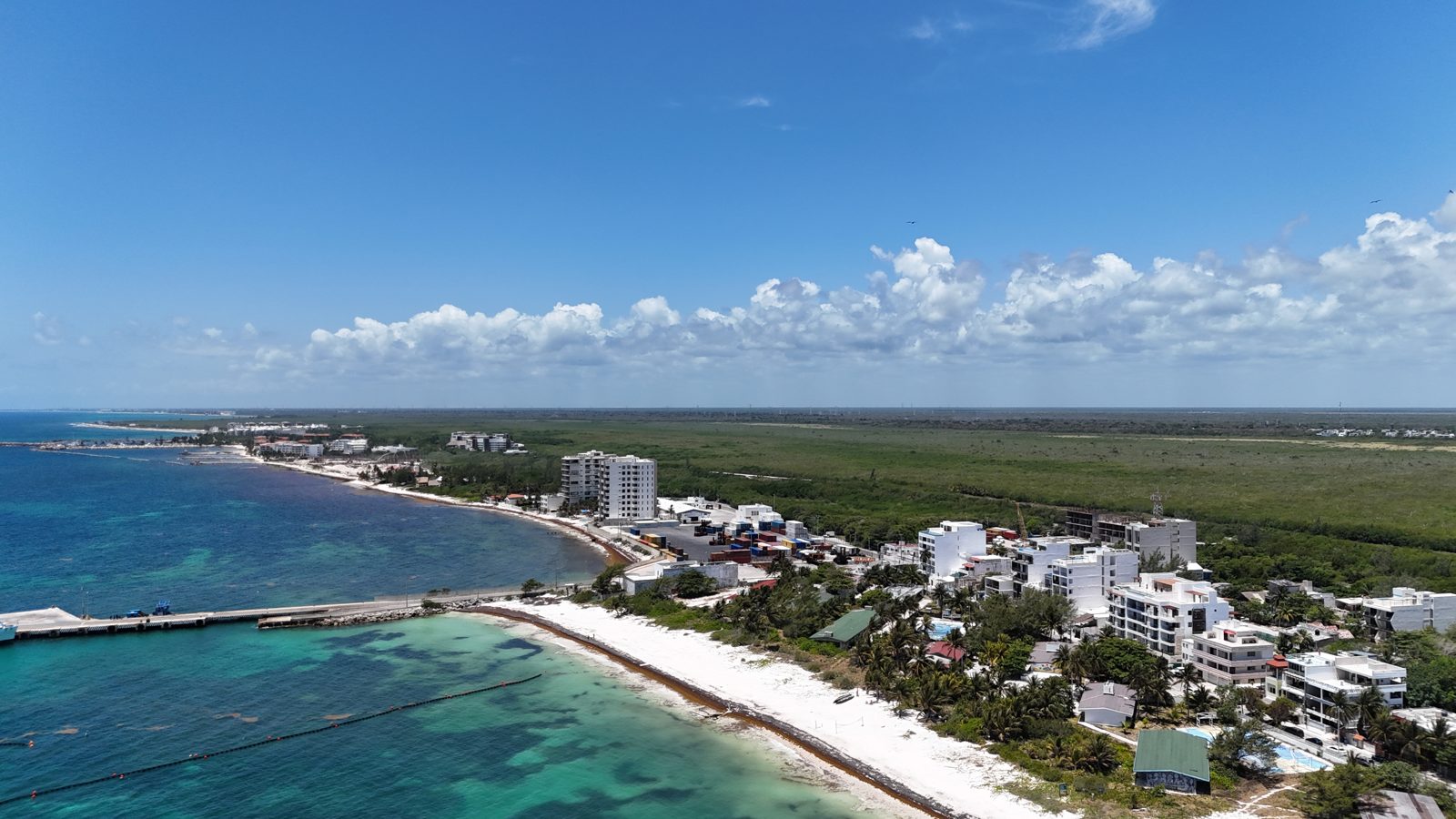
In 1898 the Compañía Colonizadora de la Costa Oriental de Yucatán began working this stretch of coast, then known as Punta Corcho. Inland, chicleros cut zigzag channels into the bark of chicozapote trees to collect chicle, the natural latex that was the base of chewing gum. Chicle, precious woods and dye wood came down from the camps around Santa María (today Leona Vicario) and Central Vallarta, much of the way by a narrow-gauge railway, and were loaded onto ships at the coast. Much of the chicle was bound for gum makers in the United States.
A town named Puerto Morelos
1936
In 1936 the settlement became an ejido, a communally held town, and took the name Puerto Morelos in honor of José María Morelos, a hero of Mexican independence. It had about fifty residents, wooden houses, a lighthouse, a dock and a single street.
The leaning lighthouse
1967
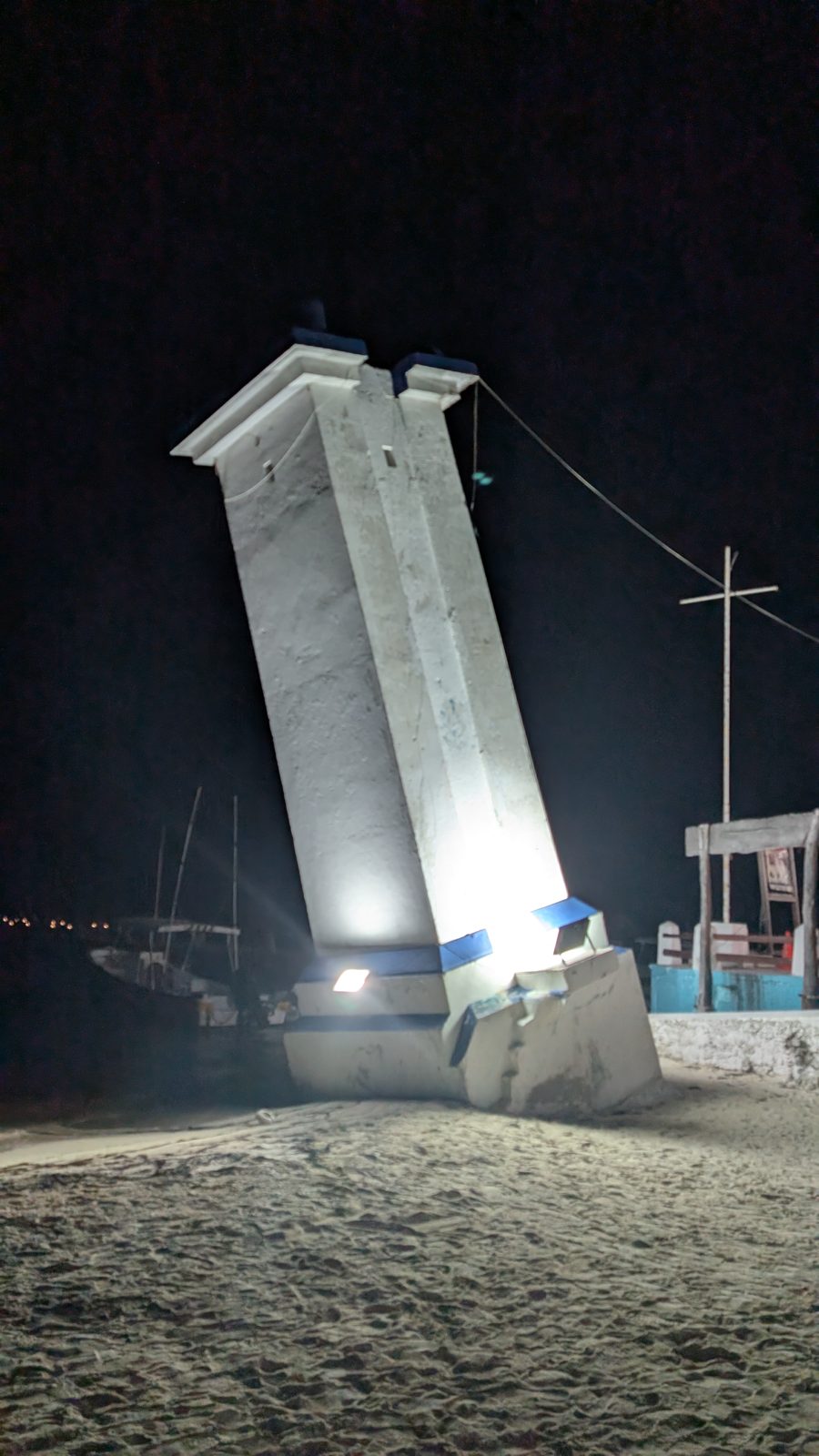
The lighthouse that stands on the beach today was built in the 1940s. On September 17, 1967, Hurricane Beulah washed the sand out from under its foundation and left it tilted. Attempts to straighten it failed, so the town left it as it was and put a new working lighthouse into service beside it. The old one has since outlasted Hurricanes Gilbert (1988) and Wilma (2005), and it has become the symbol of the town.
After chicle
Late 20th century
As gum makers turned to synthetic bases, the chicle trade faded. Puerto Morelos lived from fishing and from its port, long a departure point for the car ferry to Cozumel.
The reef, and the town today
1998 · 2016
Residents campaigned to protect the reef just offshore, and on February 2, 1998 it was declared the Puerto Morelos Reef National Park, part of the Mesoamerican Reef. On January 6, 2016, Puerto Morelos became the eleventh municipality of Quintana Roo, taking in Leona Vicario and Central Vallarta, the chicle country the port was built to serve.
Sources and further reading
- Puerto Morelos a través de los años: un pueblo resiliente — puertomorelos.mx
- La historia del faro de Puerto Morelos — Food & Pleasure
- Understanding the chicleros — Loco Gringo
- Arrecife de Puerto Morelos National Park — Visit México
- Puerto Morelos Municipality — Wikipedia